
-

 Vendor:Hartmann
Cosmopor transparent, sterile transparent film dressing
Features: Slide
Unit price: CHF 0.70CHF 0.65 / pieceRegular price From CHF 3.50 From CHF 3.24Sale price From CHF 3.50 From CHF 3.24 Regular priceUnit price CHF 0.00 perCHF 3.50 CHF 3.24plus CHF 18.63 shipping per parcel, excl. VAT
-

 Vendor:BSN Medical
Leukomed Control, sterile transparent dressing with transp. Wound dressing
Unit price: CHF 2.50CHF 2.32 / pieceRegular price From CHF 25.03 From CHF 23.15Sale price From CHF 25.03 From CHF 23.15 Regular priceUnit price CHF 0.00 perCHF 25.03 CHF 23.15plus CHF 18.63 shipping per parcel, excl. VAT
size: 10cm x 24cm, 5cm x 7cm, 7cm x 10cm, 8cm x 15cm, 10cm x 35cm
-

 Vendor:BSN Medical
Fixomull transparent, waterproof and germ-proof adhesive film
Low stockRegular price From CHF 12.47 From CHF 11.54Sale price From CHF 12.47 From CHF 11.54 Regular priceUnit price CHF 0.00 perCHF 12.47 CHF 11.54plus CHF 18.63 shipping per parcel, excl. VAT
size: 2m x 10cm, 10m x 5cm, 10m x 10cm, 10m x 15cm
-

 Vendor:BSN Medical
Leukomed T plus, sterile transparent dressing with wound dressing
Unit price: CHF 0.64CHF 0.59 / pieceRegular price From CHF 3.20 From CHF 2.96Sale price From CHF 3.20 From CHF 2.96 Regular priceUnit price CHF 0.00 perCHF 3.20 CHF 2.96plus CHF 18.63 shipping per parcel, excl. VAT
-

 Vendor:BSN Medical
Leukomed T skin sensitive, sterile transparent dressing
Unit price: CHF 2.21CHF 2.04 / pieceRegular price From CHF 11.03 From CHF 10.20Sale price From CHF 11.03 From CHF 10.20 Regular priceUnit price CHF 0.00 perCHF 11.03 CHF 10.20plus CHF 18.63 shipping per parcel, excl. VAT
size: 15cm x 8cm, 7.2cm x 5cm, 10cm x 8cm
-

 Vendor:BSN Medical
Leukomed T plus skin sensitive, sterile transparent dressing, WA
Unit price: CHF 1.93CHF 1.79 / pieceRegular price From CHF 9.66 From CHF 8.94Sale price From CHF 9.66 From CHF 8.94 Regular priceUnit price CHF 0.00 perCHF 9.66 CHF 8.94plus CHF 18.63 shipping per parcel, excl. VAT
size: 15cm x 8cm, 7.2cm x 5cm, 10cm x 8cm, 25cm x 10cm


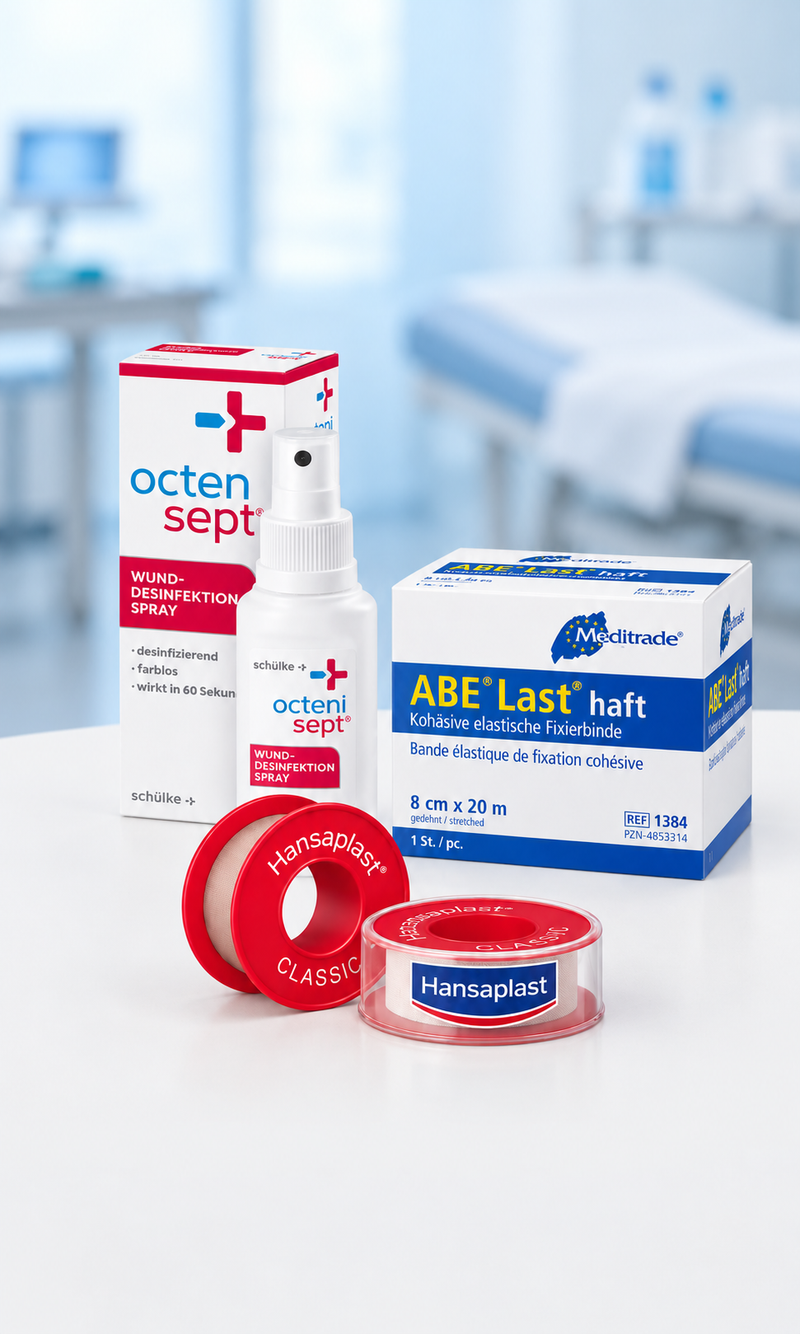


Transparent dressings for visible and waterproof wound care
Transparent dressings are clear, usually self-adhesive wound dressings that cover wounds while allowing them to be monitored without removing the dressing. They are used in doctors’ offices, hospitals, outpatient and inpatient care, as well as in postoperative care following surgical procedures or accidental injuries. Depending on the model, transparent dressings also protect the wound from water and germs, allowing patients to shower without changing the dressing. As part of the wound care regimen, transparent dressings are specifically designed to allow continuous visual monitoring of the wound rather than completely covering it.
Depending on the design, transparent dressings differ, among other things, in whether they feature an integrated, absorbent wound pad or are used as a simple fixation film without a wound pad. This allows you to select the appropriate product based on the type of wound and the desired duration of wear.
Features and Benefits of Transparent Dressings
Transparent dressings consist of a thin, semi-permeable polyurethane film that is coated with either a polyacrylate or silicone adhesive, depending on the model. Depending on the design, an absorbent wound pad made of viscose fiber or hydropolymer gel islands may also be integrated to absorb wound exudate.
Typical characteristics of transparent dressings:
- Transparent, semi-permeable film for continuous visual monitoring of the wound
- Depending on the model, features an integrated, absorbent wound pad
- Waterproof and germ-proof depending on the model, allowing the wearer to shower without changing the dressing
- Depending on the model, features a silicone adhesive for sensitive or previously damaged skin
- Several models offer high water vapor permeability, which can reduce the risk of maceration
- Varying wear times, up to 7 or 14 days depending on the product
- Sterile packaging
Which of these features apply in each individual case depends heavily on the specific model. For smaller wounds with minimal exudate, a simple transparent dressing with a wound pad is often sufficient, whereas for sensitive skin or longer wear times, more specifically selected versions with silicone adhesive or a special coating may be more appropriate.
Which transparent dressings are suitable for which applications?
The Cosmopor Transparent Sterile Transparent Dressing is suitable for minor injuries and the postoperative care of lightly exuding wounds. According to the product information, it features a central, absorbent wound pad made of viscose fiber and provides additional protection against bacterial penetration thanks to its waterproof polyurethane film.
The Fixomull Transparent, water- and germ-proof adhesive film is suitable for the waterproof fixation of wound dressings, catheters, or probes. According to the manufacturer, the adhesive film does not have its own wound pad but serves as a full-surface, transparent fixation that allows the patient to shower without changing the dressing.
Leukomed Control, a sterile transparent dressing with a transparent wound pad, is suitable for postoperative care requiring frequent wound inspection. According to the product information, both the backing film and the wound pad—made of hydropolymer gel islands—are completely transparent, allowing the wound to be monitored for up to 14 days, depending on its condition, without changing the dressing.
What should you look for when purchasing transparent dressings?
A key selection criterion is whether the wound requires an absorbent wound pad or whether a simple, transparent adhesive film is sufficient. Exuding wounds generally require a model with an integrated wound pad, whereas for wounds that are already covered or non-exuding, an adhesive film without a wound pad may suffice.
Skin compatibility also plays a role. For sensitive or previously damaged skin, depending on the model, transparent dressings with silicone adhesive are recommended, as they can be removed with less pain than dressings with traditional acrylate adhesive. The desired wear time should also be considered, as certain models are suitable for up to seven or fourteen days, according to the manufacturer’s specifications.
The appropriate size depends on the size of the wound and the surrounding skin area that needs to be covered. When selecting wound dressings, it’s also worth considering other types of dressings in case additional fixation or dressing materials are needed alongside the transparent dressing.
With a wound pad or as a sheer fixation film—which transparent dressing is right for you?
Transparent dressings with an integrated wound pad combine continuous visual monitoring with an absorbent wound pad. They are particularly suitable for wounds that are still exuding fluid, such as in the early postoperative phase or for minor injuries.
Pure fixation films without wound pads, such as Fixomull Transparent, on the other hand, are used exclusively for waterproof fixation—for example, of existing wound dressings, compresses, catheters, or probes. They are used when the actual wound care is already being provided by another product and the dressing simply needs to be securely held in place.
Models with silicone adhesive also differ from those with traditional acrylate adhesive, as they are designed for sensitive or previously damaged skin and can be removed with less discomfort. Which variant is appropriate depends on whether a wound dressing is needed and how long the dressing is to remain in place—no single type is inherently better suited than another.
Application and Instructions for Transparent Dressings
Before application, the area around the wound should be cleaned and dried according to the manufacturer’s instructions to ensure the transparent bandage adheres securely. The packaging of sterile products should be checked for integrity before use.
Since transparent dressings are water- and germ-proof depending on the model, many types allow the patient to shower without requiring additional protection for the dressing. Nevertheless, it should be checked regularly and changed if it appears to be peeling off, becomes damp, or is soiled. For disposal and maximum wear time, follow the manufacturer’s instructions and, in medical or nursing settings, the facility’s internal hygiene guidelines.
Complementary Products for Transparent Dressings
Wound dressings complement transparent dressings without an integrated wound pad by providing a separate, absorbent layer directly on the wound. Band-Aids are suitable for minor injuries that do not require a full-surface film dressing, while gauze pads can be used for additional padding or as a wound dressing under larger dressings. Together with other wound dressings, this allows you to put together the right set of supplies for different types of wounds and care situations.


